So you’ve got a vision. A container coffee shop, a sleek jobsite office, a pop-up retail space, or maybe something completely one-of-a-kind. And your first question is the same one almost everyone asks: What’s this going to cost me?
It’s a fair question, and we’re going to give you a real answer… not a runaround. The truth is that container customization costs vary quite a bit depending on what you’re building, how you’re building it, and who you’re working with. But understanding what drives those costs is the first step to planning a project that works for your vision and your budget.
Here’s what actually moves the needle.
1. The Container Itself
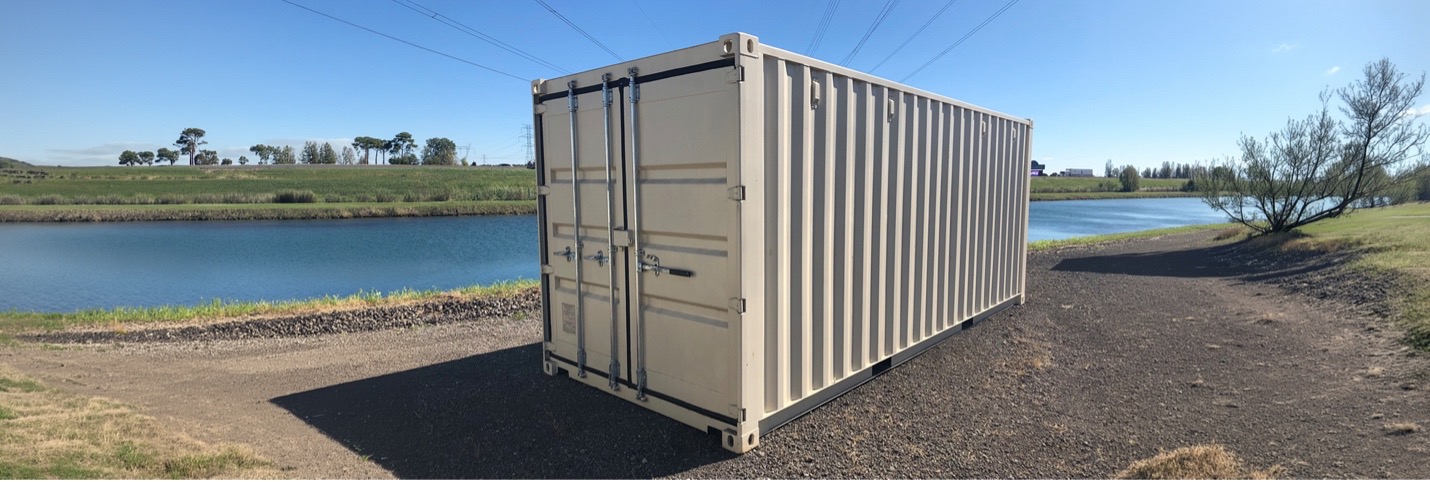
Before any customization begins, you need a container. The base unit cost depends on size, age, and condition.
Larger containers (40-foot and 45-foot units) cost more than smaller ones. Newer “one-trip” containers (essentially brand new, used just once for overseas shipping) come at a premium over older cargo-worthy or wind-and-water-tight units. For high-visibility builds like retail spaces or customer-facing offices, many clients opt for a newer unit to start with a clean exterior. For industrial or storage-forward builds, a quality used container often makes more financial sense.
The size you choose also determines how much interior space you’re working with and how much customization work there is to do.
2. Structural Modifications
This is where costs can climb quickly depending on complexity.
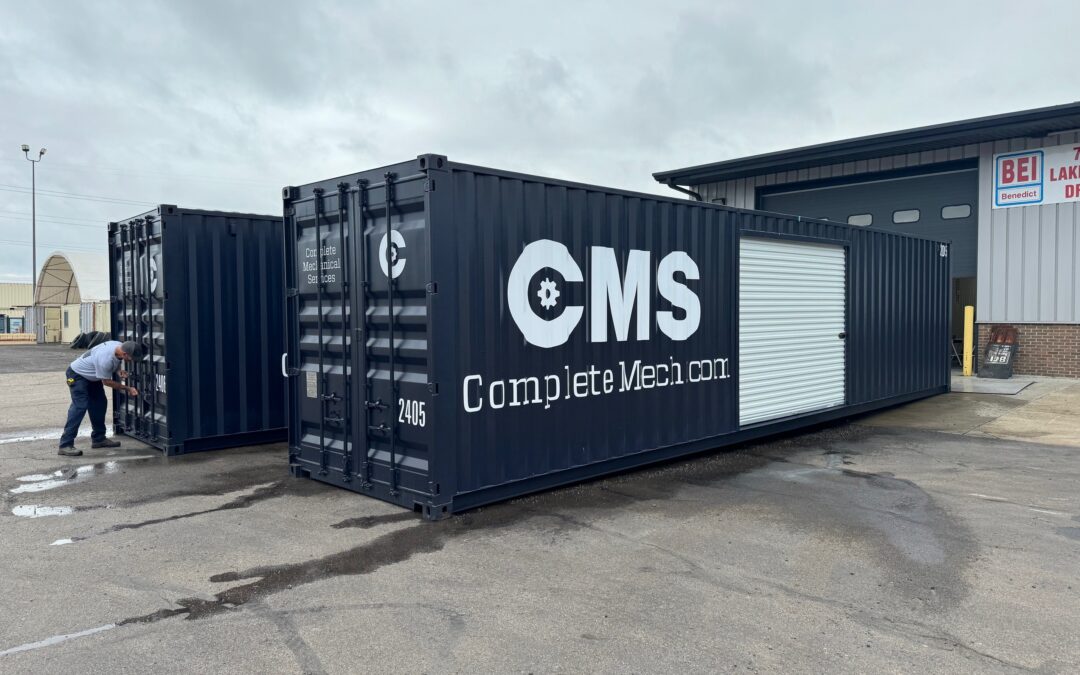
Simple modifications such as adding a window, cutting in a roll-up door, or installing a personnel door in a new location are relatively straightforward. More involved structural work, like creating large openings for garage-style access, adding a container canopy, or combining multiple containers into a single connected structure, requires more fabrication time and materials.
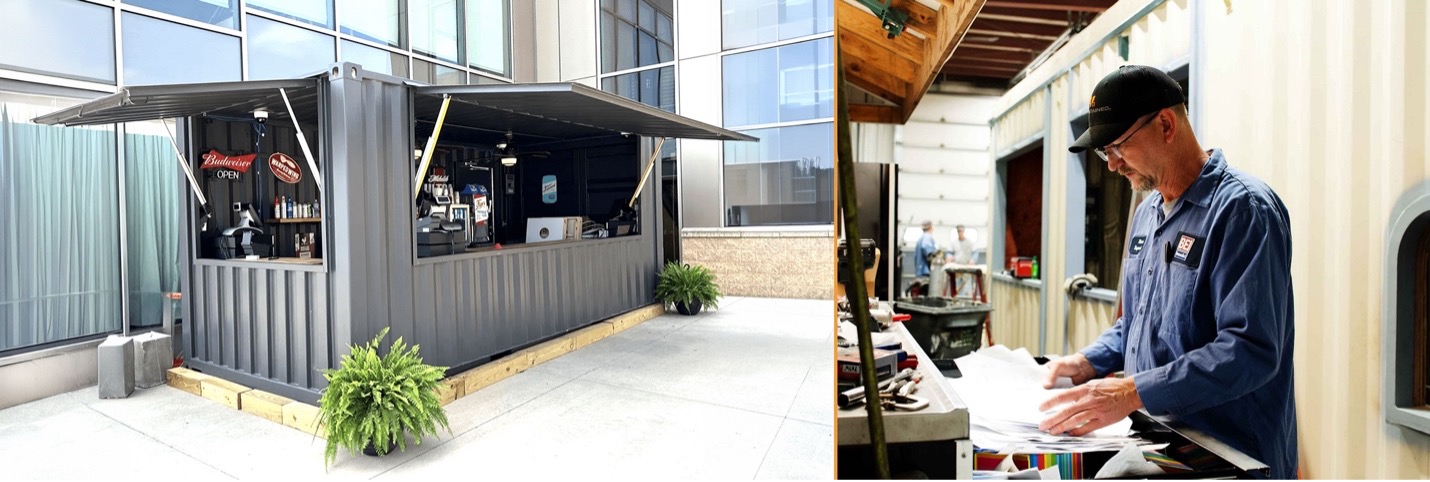
At UNCONTAINED, all structural work is done in-house at our own fabrication shop in Monroe, Ohio — you can learn more about how our build process works. That matters because it keeps quality consistent and eliminates the markups and coordination delays that come with outsourcing metalwork.
3. Interior Finishes
The interior finish level is one of the biggest cost variables in any container build.
A basic, functional interior from spray foam insulation, plywood paneling, lighting, and standard electrical costs significantly less than a fully finished space with vinyl-wrapped wall panels, stainless steel surfaces, custom cabinetry, or commercial-grade flooring.
For our ground level office builds, we offer tiered interior packages, ranging from our foundational “Core” finish to our premium “Black Label” option, so clients can choose the level that fits both their needs and their budget. See all ground level office options → The same principle applies to custom builds: the more refined and finished the interior, the higher the cost.
Don’t overlook the mechanical side of interiors either. HVAC, electrical service, data access, and plumbing (for food & beverage or healthcare builds) all add cost, but they are also what make a container a genuinely functional, move-in-ready space rather than just a modified steel box.
4. Exterior Customization
First impressions matter, especially for customer-facing builds.
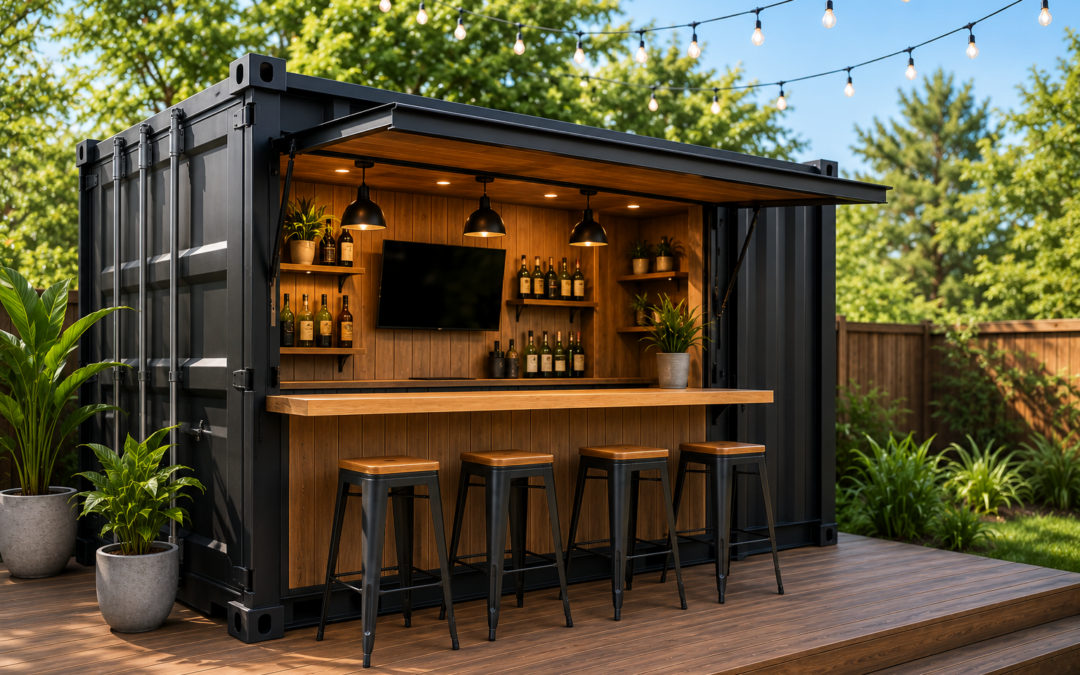
Exterior paint or wraps, custom branding, signage integration, lighting, awnings, and decorative elements all contribute to the final cost. For retail pop-ups, food & beverage builds, and event structures, exterior presentation is often as important as the interior. It’s what stops people in their tracks and communicates your brand before anyone walks through the door.
For workhorse builds like jobsite offices or industrial storage, exterior customization is usually minimal, which keeps costs down.

5. Permitting & Site Prep
This is the cost factor people most commonly forget to budget for and it can catch you off guard if you’re not prepared.
Depending on your location and intended use, a customized container may require building permits, zoning approval, and inspections. Some municipalities are well-versed in container structures; others are navigating them for the first time. Permit costs and timelines vary significantly by county and city.
Site preparation including grading, foundation work, utility hookups, and access for delivery is also a real cost that lives outside the container build itself. Your site conditions matter: a level, accessible commercial lot is a much simpler setup than a sloped residential property or a tight urban footprint.
We walk every UNCONTAINED client through these considerations during our planning process so there are no surprises.
6. Timeline & Project Complexity
Standard builds with established design packages move faster and cost less than fully custom, one-of-a-kind projects.
If you’re working from a proven template like one of our ground level office models much of the design and engineering work is already done. That efficiency translates directly into cost savings and faster delivery.
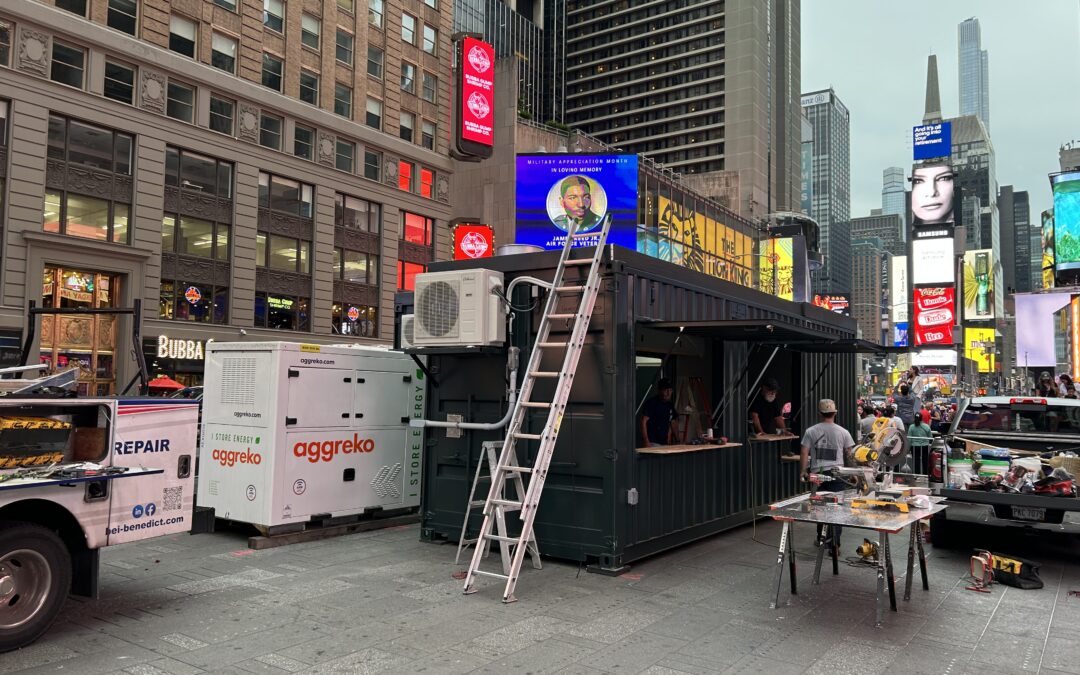
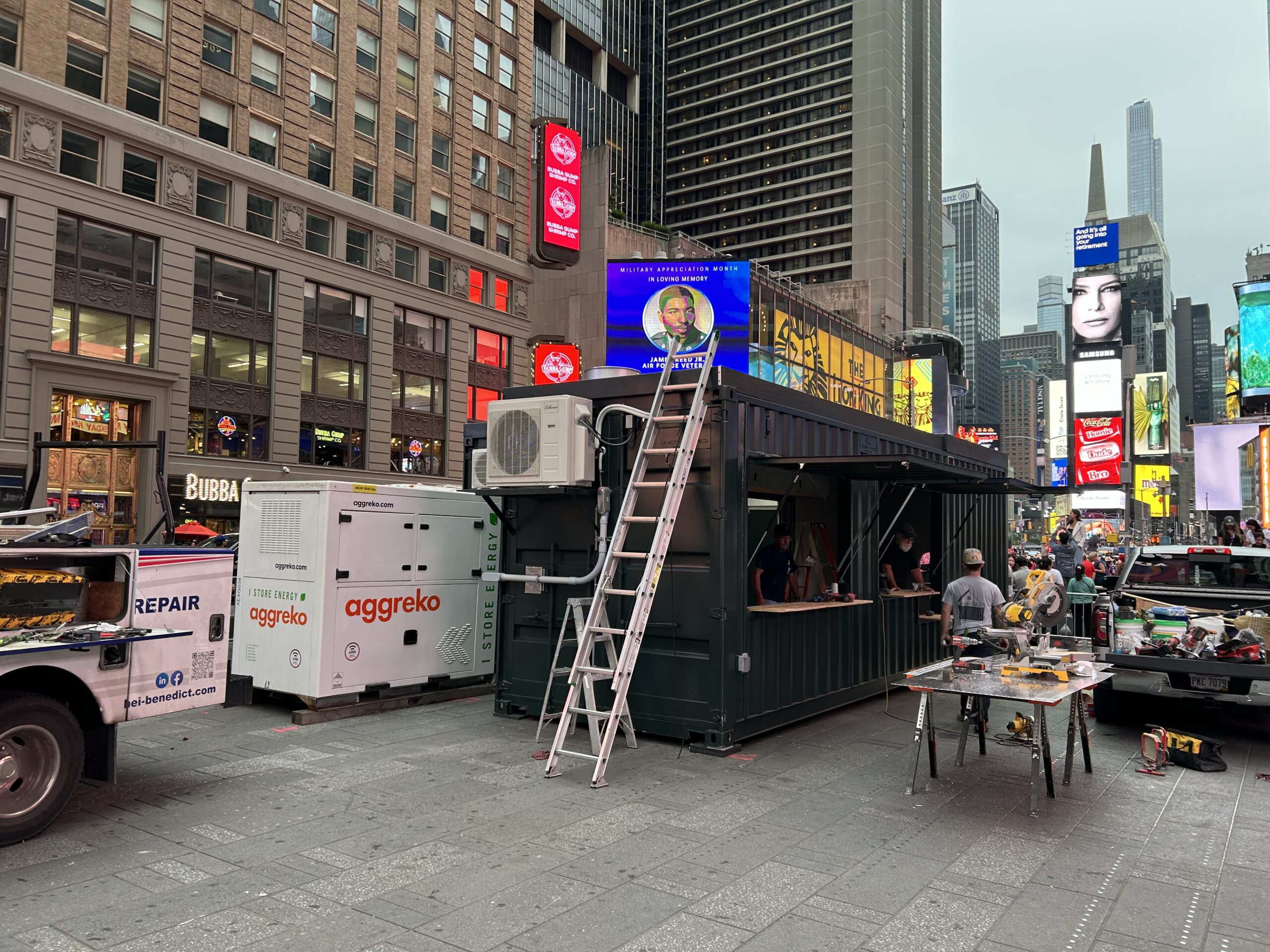
Truly custom builds, like the Buchette del Vino wine window we built for Times Square, involve more design collaboration, custom fabrication, and project management — and are priced accordingly. If your project is genuinely unique, that creative partnership is part of what you’re investing in.
So What Should You Do First?
The best way to understand what your specific project will cost is to talk to someone who builds containers for a living.
At UNCONTAINED, we don’t believe in surprise invoices or vague estimates. Our process starts with a real conversation about your goals, your site, your timeline, and your budget so we can tell you honestly what’s achievable and what a realistic investment looks like for your build.
Whether you have a fully developed concept or just a rough idea, we’re ready to help you think it through.
Frequently Asked Questions
Does UNCONTAINED work with clients outside of Ohio?
Yes. While our fabrication facility is based in Monroe, Ohio, we work with clients throughout the contiguous United States. Delivery logistics are factored into your project plan.
Can I use an existing container I already own?
In some cases, yes. We’ll assess the condition of your unit before committing to a build on it to make sure it’s structurally sound for the modifications you have in mind.
What’s the difference between a ground level office and a fully custom build?
Our ground level office packages are pre-designed, tiered builds optimized for worksite and office use — fast to produce and competitively priced. A fully custom build is designed from scratch around your specific concept, use case, and branding. Both routes start with a conversation with our team.
How long does a custom container build take?
Timeline varies based on complexity, current build queue, and permitting requirements in your area. We’ll give you a realistic timeline during your initial consultation.
Is a shipping container build more affordable than traditional construction?
For many use cases, yes — especially when speed, flexibility, and relocatability matter. The cost comparison depends on the scope of your project, your site, and what you’d be comparing it to. It’s worth having that conversation with our team.